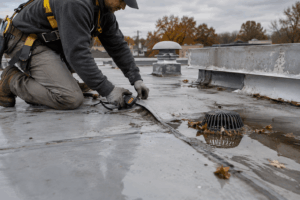

Common flat roof problems often develop in stages. Drainage slows, water collects, the roofing membrane weakens, and a leak eventually appears.
Recognizing these problems early can help Columbus property owners prevent moisture from reaching the insulation, ceilings, and walls.
Why Flat Roofs Develop Different Problems Than Sloped Roofs
A flat roof is not completely flat. It has a slight slope that directs rain and melting snow toward drains, scuppers, or gutters.
Because water moves more slowly than it does on a sloped roof, certain areas require extra attention:
- Drains and gutters
- Roofing seams
- Flashing
- Vents and other roof penetrations
Central Ohio’s heavy rain, snow, ice, and temperature changes can make roofing materials expand and contract. Over time, this movement may weaken seams or create small openings where water can enter.
Ponding Water and Drainage Problems
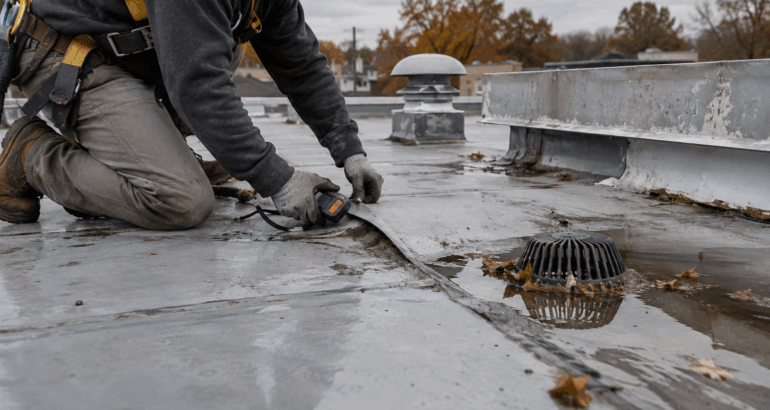
Ponding water appears as puddles that remain on the roof long after rain or snow has stopped. Water that repeatedly stays for several days may indicate:
- Clogged drains or gutters
- Poor roof drainage
- Settled insulation
- Low areas in the roofing surface
Standing water should not be ignored when it keeps returning. It adds weight, keeps the membrane wet, and may speed up deterioration around seams and flashing.
Safe maintenance steps include keeping accessible drainage areas clear, checking for interior moisture, and documenting recurring puddles from a safe location.
Do not climb onto a wet, icy, damaged, or unfamiliar roof. Persistent flat roof drainage problems should be inspected by a roofing professional.
Leaks, Cracks, and Damaged Roofing Membranes
Flat roof leaks can begin at a puncture, crack, open seam, damaged flashing, or poorly sealed roof penetration.
Common causes include storm debris, regular material wear, temperature changes, and foot traffic from previous maintenance work. Even a small opening can allow water to reach the layers beneath the membrane.
The source of a leak may not be directly above the interior stain. Water can move between roofing layers before appearing on a ceiling or wall.
A localized flat roof leak can often be repaired when the surrounding material remains in good condition. However, simply covering a visible crack with sealant may not fix trapped moisture or damage underneath.
If the same leak keeps returning, professional flat roof repair in Columbus, OH, is the safer next step.
Blistering, Bubbling, and Other Warning Signs
Bubbles or blisters may form when air or moisture becomes trapped beneath the roofing membrane. These raised areas can stretch and weaken the surface, making it more vulnerable to further damage.
Other warning signs include:
- Loose roofing material
- Lifted or damaged flashing
- Cracked or separated seams
- Recurring ceiling stains
- Unusual sagging or low areas
- Leaks that return after previous repairs
Sagging deserves prompt attention because the area may collect more water or indicate movement beneath the roof.
Property owners should monitor visible changes, check ceilings after storms, and document any new damage. Recurring or widespread problems require a professional inspection instead of repeated temporary patches.
Get Flat Roof Problems Checked Before They Spread
Deciding how to repair a flat roof depends on the source of the problem, roofing material, roof age, moisture damage, and overall condition.
A small puncture or loose flashing may only require a localized repair. Widespread deterioration, trapped moisture, or repeated leaks could make replacement more practical.
Revive Roofing’s flat roofing services in Columbus, OH include professional inspections to determine whether maintenance, repair, or replacement makes the most sense for your property.
Schedule a free flat roof inspection with Revive Roofing today.